Genesis — start a new organisation
Genesis (at /genesis, outside any workspace) turns founder intent into a running organisation: channels, roles, AI seats, invitations, brand — generated from what you tell it, reviewed by you, then committed in one act.
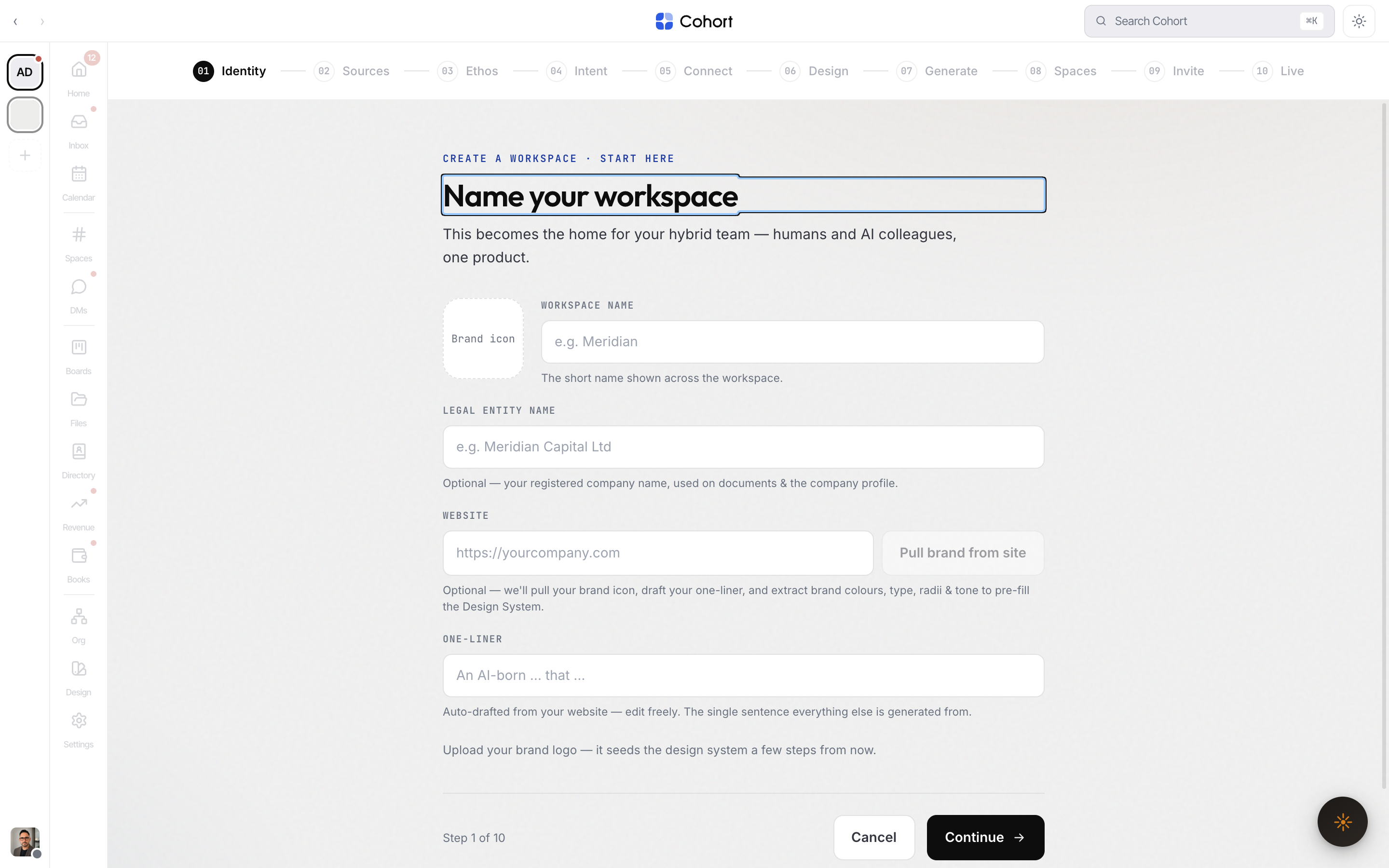
The wizard runs ten stages across the top rail:
| # | Stage | What happens | | --- | -------- | ------------------------------------------------------------------------------------------------------ | | 01 | Identity | Workspace name, logo and one-liner; optionally pull the brand (favicon + design tokens) from a website | | 02 | Sources | Upload documents or paste URLs — analysed once to pre-fill everything downstream | | 03 | Ethos | Your conviction — what the org believes | | 04 | Intent | The business intent | | 05 | Connect | Import a directory (CSV) and select integrations | | 06 | Design | The editable brand source of truth, with a live component preview | | 07 | Generate | The org draft, tier by tier, behind review gates | | 08 | Spaces | Tune the recommended spaces and roles — manually or via AI suggestions | | 09 | Invite | Seed the human team | | 10 | Live | Commit everything and enter the app |
Feed it sources
Sources sits early on purpose: material you give it (docs, URLs, your website) is analysed once and seeds the Ethos and Intent fields and everything generated after. The analysis returns an honest verdict banner — sufficient, partial or insufficient, with what's missing — and if no AI provider is configured, the banner says to fill the steps in yourself rather than pretending.
Review the generated org, tier by tier
Generate pre-drafts each tier the moment its inputs exist, in order: phases → streams → clusters → seats. Between tiers sits a review gate:
- Read the tier
Each tier lists its generated items — the org's phases, work streams, team clusters, then the individual seats.
- Accept, regenerate or edit
Accept the tier to move on, regenerate for another draft, or edit items in place. A toggle chooses human-approve per tier versus letting agents auto-accept.
- Know it's recorded
Every accept and regenerate is recorded as a Genesis artifact and an event — acceptance opens an audited Genesis run, so the org's own founding is on the record.
Commit and go live
The Live stage commits the whole spec into a real org: channels, roles, AI seats, invitations, design tokens and identity — then enters the app.
Your draft persists locally in the browser as you type (the workspace rail even mirrors the in-progress brand mark), and a guard warns before you navigate away from unsaved work. Committing, though, is a one-time provisioning act — review the tiers before Live.
Genesis on a phone
Below tablet width, the wizard doesn't load at all. The phone shows a resume-safe summary of your draft instead — a ten-stage, one-time provisioning act is desktop and tablet work. Pick the draft back up on a bigger screen.
After Genesis
Commit creates the org, your founder seat and owner account, the company profile, design tokens, channels with your membership, roles, AI seats and the invitations — then drops you into the new workspace. First stops from there: Books to set up the money desk, and Your settings to secure your account.